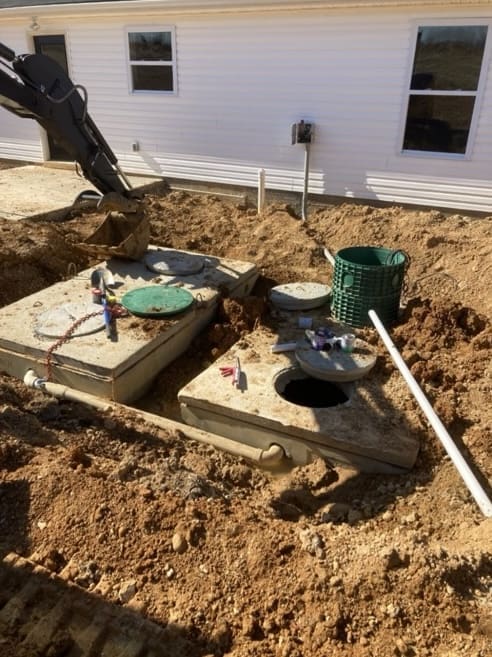
Underground utility work involves excavating trenches and preparing routes for utilities that need to run below ground. The scope depends on the project and utility type. Accurate excavation helps establish the required path, depth, and grade while coordinating the utility route with buildings, driveways, septic systems, drainage, and other site improvements.
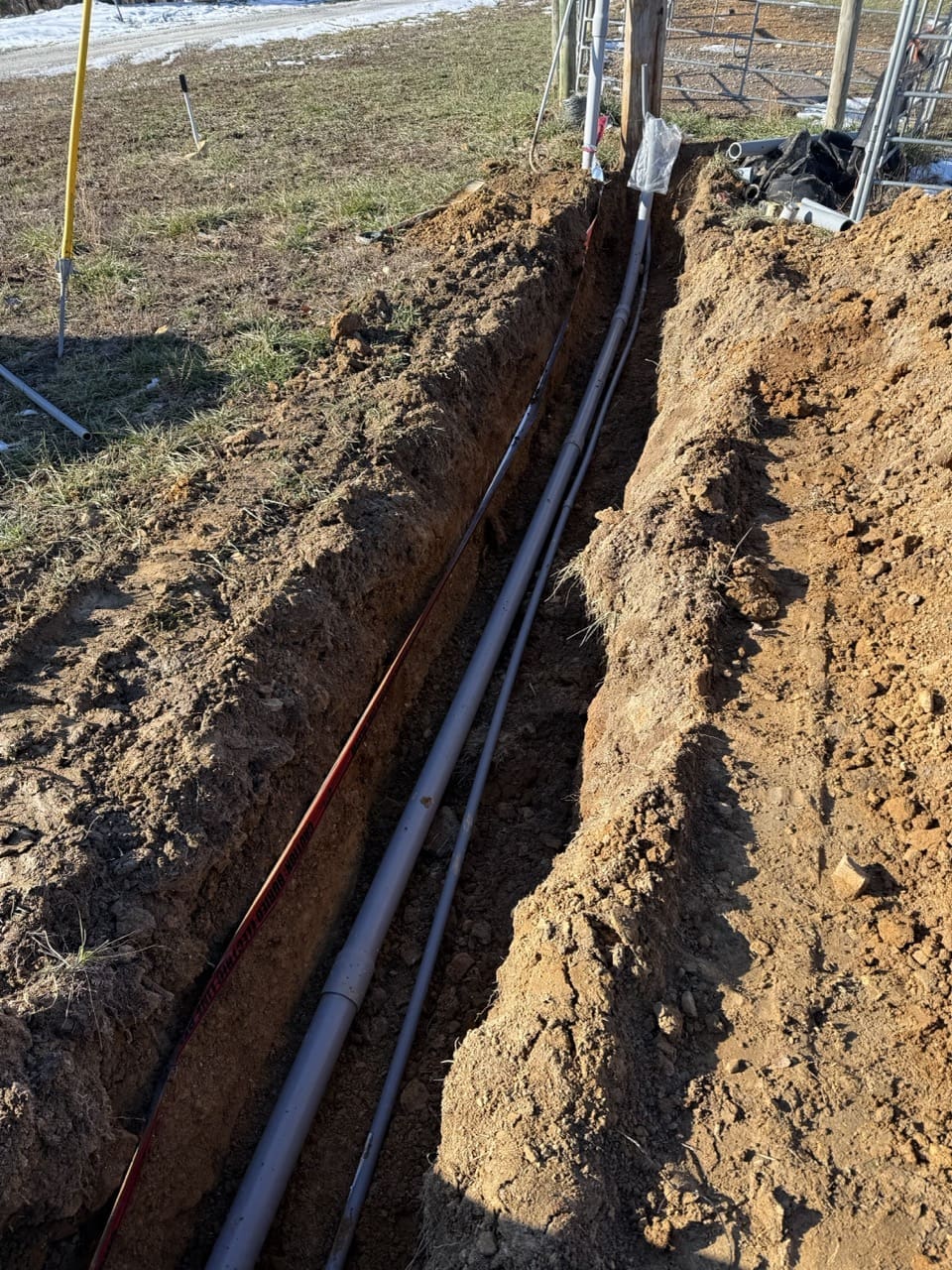
MID TN EXCAVATOR
Underground Utility Installation in Middle Tennessee
Trenching and installation for water, sewer, and utility lines across Humphreys, Dickson, Hickman, Perry, Maury, Montgomery, and Davidson counties — installed at proper depth, properly bedded, and built to last.
JD Lee Excavating handles underground utility installation for residential and commercial projects across Middle Tennessee — water lines, sewer lines, electrical conduit, gas lines, and drainage pipe installed as part of a full site package or as a standalone scope.
Underground utilities are the part of a project nobody sees once the ground closes back over them. That’s exactly why the installation has to be right — proper depth, proper bedding, proper slope on gravity lines, and connections made correctly before the trench gets backfilled. A utility line installed at the wrong depth or with improper bedding doesn’t fail immediately. It fails under load, under frost, or under the weight of equipment that crosses it years later.
COMMERCIAL UTILITIES INSTALLATION
Commercial utility installation involves coordination across multiple systems, multiple trades, and a site plan that has to account for every line running under the finished surface. We trench and install commercial water lines, sewer mains, storm drainage, and electrical conduit from approved civil plans, coordinating with engineers, inspectors, and other trades to keep the underground phase moving without holding up the work above ground. Our excavation equipment handles deep utility trenches, large-diameter pipe, and tight tolerances on gravity sewer slopes efficiently — which matters on commercial projects where the underground scope is on the critical path for everything that follows.
RESIDENTIAL UTILITIES
INSTALLATION
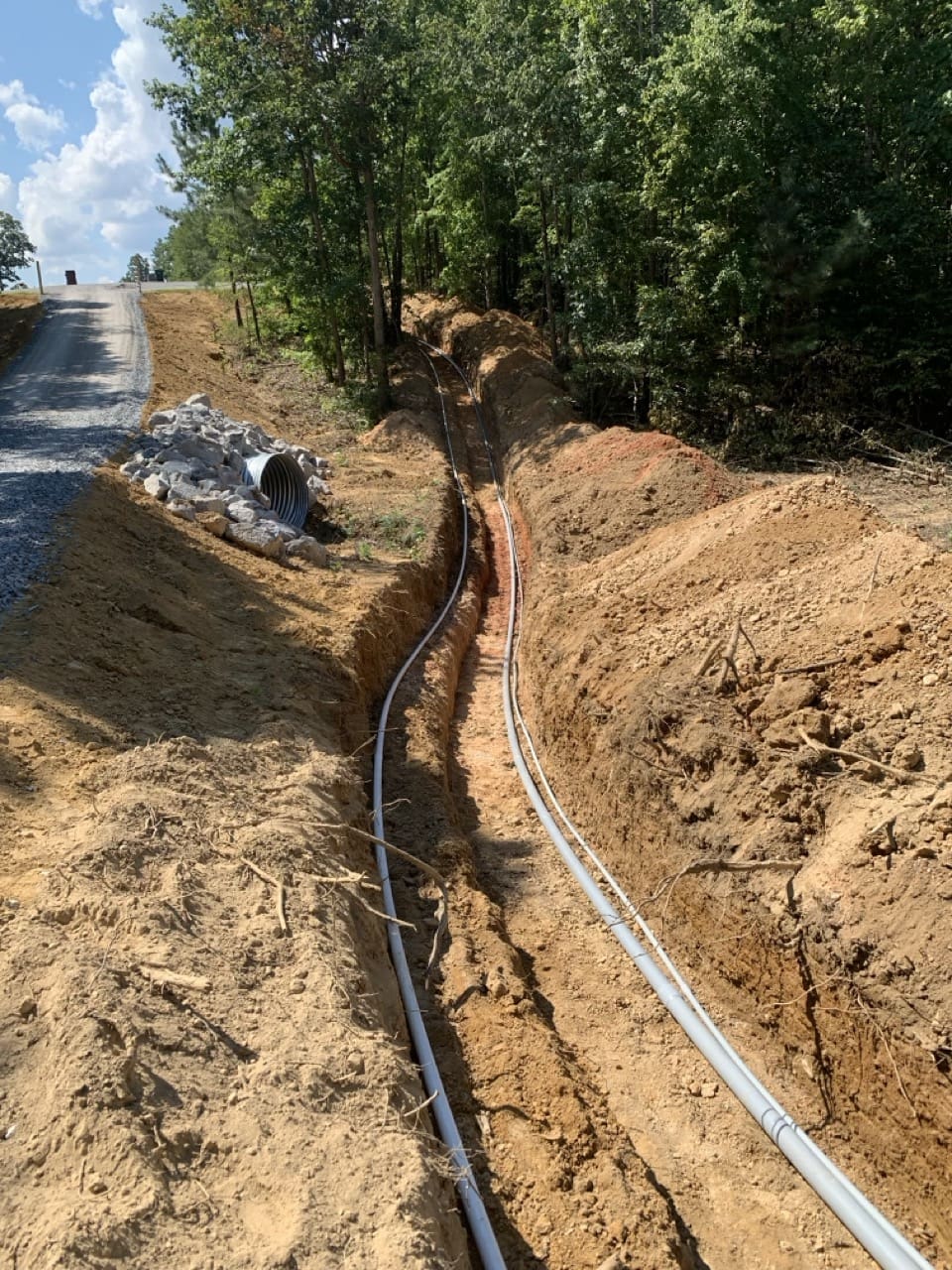
Residential utility installation on a raw land build is one of the phases that has to happen in the right sequence and get done correctly before anything gets buried. Water service lines, electrical conduit, and sewer or septic connections all go in during site prep — after clearing and rough grading, before the building pad and final grade. We install residential utilities as part of the full site package so the sequencing is handled by one contractor rather than coordinated across multiple crews with competing schedules. Lines go in at the right depth, bedded correctly, with connections inspected before the trench closes.
What Underground Utility Work Involves
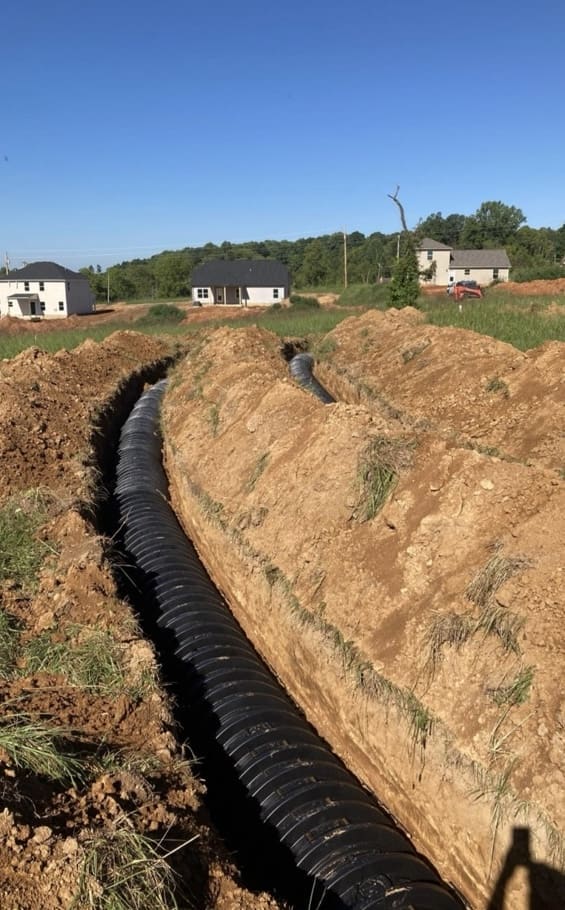
Getting utility lines in the ground correctly starts with the layout and ends with the trench closed over a system that performs without problems.
- Utility locations marked and existing lines identified before trenching begins
- Trench excavated to proper depth and width for the line being installed
- Trench bottom prepared and bedding material placed where required
- Pipe or conduit installed at correct grade and alignment
- Gravity lines checked for proper slope before backfill begins
- Connections made and inspected prior to trench closure
- Backfill placed and compacted in lifts to avoid settlement over the trench
- Surface restored to finished grade and condition
Why Depth and Bedding Determine Long-Term Performance
A utility line that gets installed at the wrong depth or without proper bedding looks identical to one that was installed correctly — right up until it fails. Water lines installed above the frost line crack and rupture in a hard winter. Gravity sewer lines without proper slope back up and cause sewage to surface. Conduit installed without adequate cover gets damaged by equipment, frost heave, or the weight of vehicles that cross it. None of these failures announce themselves during installation. They show up later, after the ground is closed, after the surface is finished, and after fixing the problem means excavating through finished work to get back to what’s underneath.
We install underground utilities at the depth the line requires, bedded in the material the application calls for, and sloped correctly on every gravity system before the trench closes. The inspection happens before the backfill goes in — not after, when there’s nothing left to inspect.
Frequently Asked Questions About Underground Utilities
When should underground utilities be installed on a new construction site?
Utility work should be coordinated with the overall construction sequence so trenches do not conflict with foundations, driveways, septic areas, grading, or other improvements. Planning routes early can reduce unnecessary excavation and rework. The best installation stage depends on the project plans and the other site work taking place.
Who handles trenching for underground utilities?
An excavation contractor can provide the trenching and earthwork needed for many underground utility projects. The exact responsibilities depend on the utility and project. JD Lee Excavating provides underground utility trenching alongside its other excavation services, allowing utility earthwork to coordinate with grading, site prep, roads, and building areas.
How does grading affect underground utility installation?
Utility depths and routes relate to the finished grade of the property, which makes grading an important part of planning. Installing lines without considering future cuts or fills can create conflicts later. Coordinating trenching with planned elevations helps ensure the utility work fits the final site rather than only the existing terrain.
Can underground utility work be done at the same time as other excavation?
Utility trenching can often be coordinated with site prep, grading, driveway construction, and other excavation phases. Combining related earthwork can reduce repeated mobilization and help crews plan around future improvements. The actual sequence depends on the construction plans, utility requirements, site conditions, and work being completed by other contractors.
Does JD Lee Excavating handle utility trenching for commercial projects?
Yes. JD Lee Excavating provides underground utility trenching for residential and commercial site work in Middle Tennessee. The company has a full fleet of heavy equipment, GPS-based grade control, commercial excavation experience, and a licensed project capacity of up to $3 million for larger qualifying projects.
25+
Years in Business
100
Mile Service Radius
$
3MM Licensed Project Capacity
Licensed & Bonded
Contractor #83847
Septic #14383


Where We Work
We’re based in McEwen, TN and run crews across Middle Tennessee — closer to home for smaller residential jobs, up to 100 miles out for the right commercial project.
Core Service Area
- McEwen
- Waverly
- Dickson
- Erin
- Hurricane Mills
- Vanleer
- Centerville
- Tennessee Ridge
- New Johnsonville
- Cumberland City
Extended Service Area
- Nashville
- Clarksville
- Columbia
- Franklin
- Murfreesboro
- Spring Hill
- Brentwood
- Lebanon
- Hendersonville
- Smyrna

WHO WE WORK WITH
Commercial
Large-acreage projects, subdivision prep, commercial site work, and infrastructure earthwork across Middle Tennessee. We carry the equipment, the license, and the bonding to handle jobs that smaller operators can’t touch.
- Land developers and subdivision builders
- General contractors sourcing a dependable excavation subcontractor
- Large private landowners with ongoing earthwork needs across
- Humphreys, Dickson, Hickman, Perry, Maury, Montgomery, and Davidson counties
- Civil engineers and architects coordinating site development
- Project managers and estimators putting together commercial bids
Residential
If you just closed on raw land and need someone to make it buildable — clearing, grading, driveway, septic, building pad — that’s the job we were built for. One contractor from raw ground to ready-to-build, start to finish.
- Homeowners building on raw or wooded acreage in Middle Tennessee
- Land buyers who need site prep before a builder can start
- People relocating from Nashville or out of state who want the process handled professionally
- Residential contractors who need a reliable excavation sub on their schedule
- First-time land builders who need one contractor to handle every phase — clearing, grading, septic, and driveway — start to finish
WHY JD LEE EXCAVATING
Unlike most small, one-man operations, JD Lee Excavating runs a full fleet of heavy equipment — giving us the capacity to handle large-scale residential and commercial projects without delay, without rental dependency, and without sending the wrong machine to the wrong job.
Our fleet includes bulldozers with rippers, excavators with heavy-duty bucket attachments, pans and scrapers, haul trucks, low boys, and dump trucks. For compaction work — particularly on building pads and pond construction — we run both a padfoot compactor and a smooth drum roller, equipment that most local operators simply don’t own. We also run a GPS-based grade control system for precision earthwork on projects where tolerances matter.
We’re capable and agile enough to turn around smaller, local jobs quickly. But what sets JD Lee apart in the Middle Tennessee market is the depth of iron behind every project — owned, maintained, and ready to work.
- 25+ Years in Middle Tennessee
- $3M Licensed Project Capacity
- 100-Mile Service Radius
- Licensed & Bonded Contractor #83847