

You bought land in Middle Tennessee and you’re ready to build. Now comes a question that doesn’t always have an obvious answer:
What should happen first?
Do you clear the land? Put in the driveway? Prepare the building pad? Install the septic system? Start running utilities?
There isn’t one order that works for every property. The slope of the land, soil, drainage, home location, septic plans, and access can all affect the sequence.
That is why good site prep starts with planning the whole property — not treating each step as a separate project.
If you’re ready to start preparing raw land in Middle Tennessee, check out these tips from JD Lee Excavating.
Start With the Site Plan
Before heavy equipment starts moving dirt, you need to know how the major parts of the property will work together. To determine that, ask yourself a few questions:
- Where will the home or building sit?
- How will vehicles and construction equipment reach it?
- Where will the septic system go?
- Where will utilities enter the property?
- How will rainwater move across the site?
A decision in one area can affect another, so plan carefully. For example, the best route for a driveway may depend on the building location and slope. The septic area can limit where other work takes place. Grading around the building pad can change how water moves across the property.
Planning these elements early helps reduce problems once excavation begins.
Land Clearing Usually Comes Early

If the building site, driveway, or other work areas are wooded or overgrown, land clearing is often one of the first physical steps. This part of the process involves removing trees, brush, stumps, roots, and other material from areas needed for construction.
But clearing land for a building project doesn’t always mean stripping the entire property.
A contractor may need to clear areas for the building pad, driveway, septic work, utility routes, drainage improvements, and equipment access. Keeping other areas wooded may help preserve privacy, shade, and the natural character of the property.
The goal is to clear what the project requires while keeping the overall site plan in mind.
Construction Access May Come Before the Finished Driveway
Heavy equipment, dump trucks, concrete trucks, material deliveries, and contractors all need reliable access to the site.
That makes driveway access an early consideration, even if the finished driveway comes later.
The route needs to work with the terrain and provide practical access to the building site. Drainage also matters. Poorly planned runoff can wash gravel, create ruts, or cause erosion along the drive.
Establishing access early makes the rest of the site work easier. Final grading and finishing can happen later, after heavy construction traffic has slowed down.
Septic Needs to Be Part of the Plan Early
For rural properties that will rely on a septic system, don’t treat septic as an afterthought.
The approved septic location can affect where you place the house, driveway, utilities, and other improvements. You also need to protect areas intended for the septic system from unnecessary disturbance and heavy traffic.
That doesn’t always mean the septic system itself will be installed before everything else. It means you should account for septic requirements before major site work begins.
JD Lee Excavating holds Tennessee Septic License #14383 and provides septic installation as part of its excavation and site-work services.
Prepare the Building Pad
Once the building location has been established and the necessary area is accessible, work can begin on the building pad.
This step involves much more than making the ground look flat.
The site needs to reach the planned grade while accounting for drainage around the future structure. Depending on the project, excavation may involve cutting down high areas, moving material, placing suitable fill, and preparing the site for the next phase of construction.
Accurate grading matters here. At JD Lee Excavating, we use GPS-based grade control, which helps operators work from project elevations and specifications while grading a site.
Coordinate Underground Utilities
Water, electric, communication lines, and other underground services need routes to the building.
Utility trenching may happen at different stages depending on the project. What matters is planning those routes before other improvements make access harder.
Think about where utilities will enter the property and how their paths relate to the driveway, septic system, drainage features, building pad, and other planned improvements.
Finish Grading and Drainage
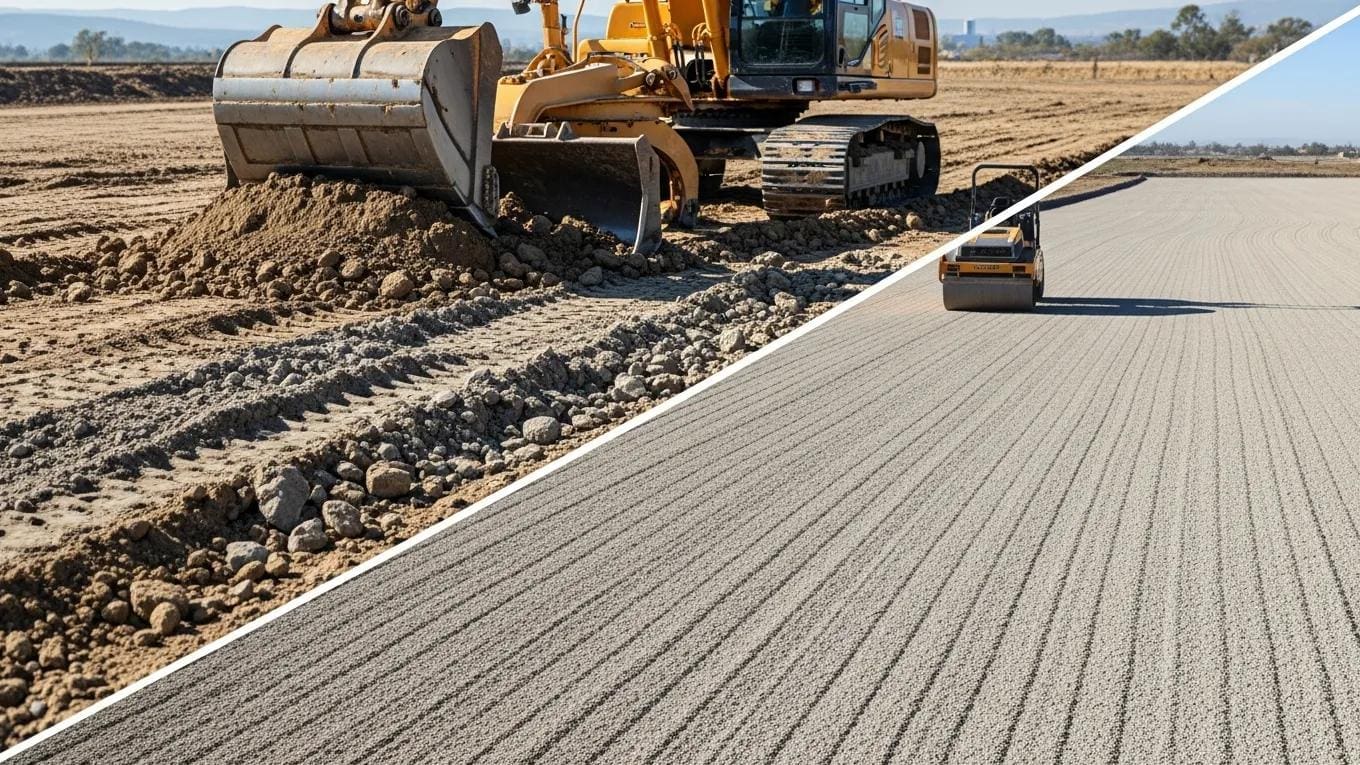
Once major underground work and heavy construction are complete, the site will likely require finish grading and drainage work.
Water should move away from structures and through the property in a controlled way. Poor drainage leads to standing water, washed-out areas, erosion, driveway damage, and other problems.
To avoid future issues, drainage should be considered throughout site development rather than addressed only at the end.
So, What Is the Right Order?
For many raw-land projects, the process looks something like this:
Planning → Clearing → Construction Access → Building Pad → Utilities and Septic Work → Final Grading and Drainage
But that is a general example, not a rule.
One Middle Tennessee property may require significant clearing before anything else can happen. Another may need early drainage work. A steep property may require more extensive grading and access planning. Septic requirements can also affect how the entire site is arranged.
The best sequence depends on the land and what you plan to build.
One Contractor Can Help Coordinate Multiple Phases
Hiring separate companies for every stage complicates the process, especially when one contractor’s work affects what another needs to do.
JD Lee Excavating provides land clearing, site prep, building pads, roads and driveways, underground utilities, septic installation, grading, ponds, retaining walls, demolition, and other excavation services for residential and commercial projects.
With more than 25 years in business, a full fleet of heavy equipment, GPS grade control, and a licensed project capacity of up to $3 million, JD Lee can handle everything from residential land development to larger commercial site-work projects.
JD Lee Excavating is based in McEwen, Tennessee, and serves communities throughout Middle Tennessee, including Waverly, Dickson, Erin, Centerville, Tennessee Ridge, New Johnsonville, Cumberland City, Clarksville, Nashville, Franklin, Columbia, Murfreesboro, and surrounding areas.
Frequently Asked Questions
What should I do first after buying raw land in Middle Tennessee?
Start by determining where the building, driveway, septic system, utilities, and drainage features will need to go. Once you understand how those pieces fit together, you can determine the right order for clearing and site work.
Should I install a driveway before clearing the land?
It depends on the property. You may need some clearing before equipment can establish access. On many projects, contractors create construction access early and complete the finished driveway later.
Does the septic system go in before the building pad?
Not always. However, you should identify and account for the septic area early so grading, driveway construction, utilities, and equipment traffic do not interfere with it. Installation timing depends on the individual project.
When should utilities be installed on raw land?
Plan utility routes early, even if installation happens later. Knowing where water, electric, and other services will run helps prevent conflicts with the driveway, septic system, drainage, and other site improvements.
Can one excavation contractor handle several stages of site prep?
Yes. JD Lee Excavating handles multiple phases of residential and commercial site work, including land clearing, building pads, roads and driveways, underground utilities, septic installation, grading, and drainage-related excavation.
Choose JD Lee Excavating for Site Prep in Middle Tennessee
If you have raw land and aren’t sure what needs to happen first, start by looking at the property as a whole.
Contact JD Lee Excavating to schedule a site visit and discuss the excavation and site work your project needs.
