
Creeks add beauty and value to a property, but moving water can also cause serious problems. Over time, flowing water washes soil away from the bank, potentially leading to numerous issues. Heavy rain and high water can make that damage happen even faster.
JD Lee Excavating recently worked on a creek bank reclamation project that shows how riprap can help. Large rock placed along the bank adds weight and structure where flowing water has worn away the soil.
For property owners in Middle Tennessee, creek bank erosion is more than a cosmetic issue. If it continues, it can lead to lost soil, unstable ground, drainage problems, and damage to nearby areas.
What Causes a Creek Bank to Wash Away?
Water naturally changes the soil around a creek. As water flows against a bank, it loosens and carries away small amounts of dirt. The damage may seem minor at first, but it adds up over time.
Storms can speed up that process. A creek that normally moves at a slow pace can rise fast after heavy rain. Faster water puts more force on exposed soil. If the bank already has weak or bare areas, each storm may wash away more material.
Property owners may notice signs such as:
- Exposed roots along the creek
- Sections of the bank that look steep or undercut
- Soil washing into the creek
- New gullies or channels near the bank
- Areas that lose more ground after heavy rain
- Rocks, soil, or other material shifting downstream
Catching erosion early allows you to address the problem before more ground washes away.
How Does Riprap Help Control Creek Bank Erosion?
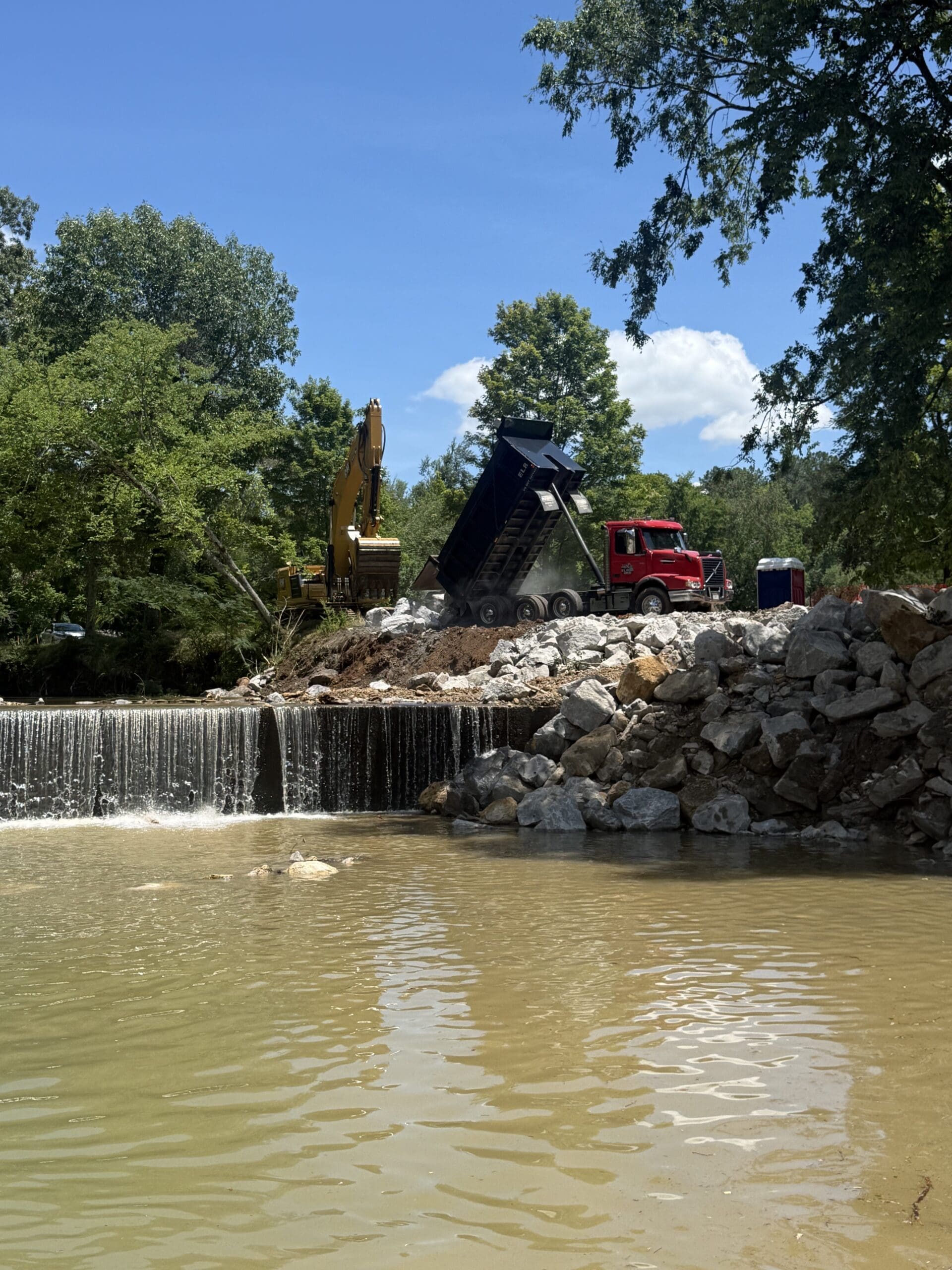
Riprap consists of large, durable rock placed in areas where water erodes soil. The rock creates a strong surface that helps protect the ground underneath.
Unlike loose soil, large rock can withstand moving water. Proper riprap placement can help slow erosion, support the bank, and stabilize areas that have already lost soil.
The photo from this project shows the scale of the work. Heavy equipment and truckloads of large rock allow the crew to rebuild and protect the affected creek bank.
Riprap does more than cover an eroded spot. It helps prevent further erosion. The work must account for the shape of the bank, water flow, drainage, soil conditions, and the area that needs protection.
Creek Bank Repair Is Part of a Bigger Drainage Plan
Water rarely affects just one part of a property. A washed-out creek bank may connect to other drainage or grading problems nearby.
For example, runoff from higher ground may flow directly into the damaged area. Poor grading can send too much water to one spot. A drainage path may also need work so water can move through the property without washing away soil.
That is why creek bank repair often works best as part of a broader erosion-control plan. Depending on the site, excavation work may include grading, drainage improvements, rock placement, or other site work.
Why Proper Site Work Matters
Simply dumping rock onto an eroded bank usually won’t solve the problem. The bank often needs reshaping or other site preparation before crews can place the rock. The size and placement of the material also matter.
An experienced Middle Tennessee excavation contractor will look at how water moves across the property and how the damaged area fits into the surrounding site.
At JD Lee Excavating, we have more than 25 years of experience with residential, commercial, and land development projects throughout Middle Tennessee. We handle excavation work ranging from grading and drainage to larger site preparation projects. If you need help with a creek on your property, you can rely on us to get the job done right.
Frequently Asked Questions
What is riprap used for along a creek bank?
Riprap uses large rock to protect soil from moving water. It helps reduce erosion and adds structure to damaged or vulnerable sections of a creek bank.
How do I know if my creek bank has an erosion problem?
Look for exposed roots, missing soil, steep or undercut banks, new washouts, or areas that lose more ground after storms. Changes that become more noticeable after heavy rain may point to an ongoing erosion problem.
Can grading help with creek bank erosion?
It can in some situations. Grading can help control how runoff moves across a property and reaches the creek. The right approach depends on the site’s slope, drainage, soil, and water flow.
Is riprap suitable for every erosion problem?
No single erosion-control method fits every property. The location, water flow, bank condition, drainage, and surrounding site all affect the type of work that may make sense.
Does JD Lee Excavating handle projects besides creek bank repair?
Yes. JD Lee Excavating provides site prep, land clearing, grading, roads and driveways, underground utilities, ponds and lakes, retaining walls, septic installation, demolition, and other excavation services for residential and commercial projects in Middle Tennessee.
Creek Bank Repair and Erosion Control in Middle Tennessee
Creek bank erosion can get worse each time heavy rain sends more water through the area. Repairing damaged ground and improving how the site handles water helps protect the property over time.
JD Lee Excavating provides creek bank repair, erosion control, drainage work, grading, and site work in Middle Tennessee. Based in McEwen, Tennessee, we serve Waverly, Dickson, Erin, Hurricane Mills, Centerville, Tennessee Ridge, New Johnsonville, and the surrounding areas.
If moving water is washing away part of your property, contact JD Lee Excavating to discuss the site and the excavation work it may need. Reach out today to request a free quote.
